

Turning Commercial Spaces into Homes for Profit.
It may be the last order for some. Savvy property investors are discovering they can make lucrative returns from commercial to residential conversions. One of these methods is converting pubs to residential property.
It may be the last order for some. Savvy property investors are discovering they can make lucrative returns from commercial to residential conversions. One of these methods is converting pubs to residential property.
Many public houses across the country are creating the perfect opportunity for investors to acquire stock significantly below market value. Many pub companies are quickly selling off stock to reduce debt. They’re also tired of non-performing tenants who can’t make businesses work because society has changed.
Beer tax hikes, the smoking ban, cheap supermarket booze and cultural shifts towards eating out mean so many of these disused pubs are occupying prime locations. With great transport links, outbuildings and spacious gardens these are ideal for a range of conversions from luxury flats to HMOs.
Find the right commercial to residential conversions
Many breweries don’t sell off gardens separately in order to maximise their income. These can be converted into big, stylish, characterful properties which buyers and tenants appear to love.
The big advantage for bringing these derelict units back to life is they can help regenerate an area rather than see them left unloved and a sore sight for the locals. Buying a closed pub has its advantages as you gain considerably more floor space for your money compared with residential. This means you end up with more saleable space.
Many of these units are sold freehold with vacant possession while others may have a short ‘fag-end’ lease where the freehold can be eventually purchased. These are typically known as ‘cold investments’ where there is a potential for redevelopment at a later date.
Public House Change Of Use Planning Permission
Councils are very wary about leaving pubs empty for a long time because they can become rundown and have squatters move in. Although pubs have flexible A4 planning investors could apply for planning to convert the building into residential property.
Planning would typically take 2-3 months for consent and for a complete change of use but raising a conventional mortgage would not be possible. You would have to look at development finance, bridging or other forms of private finance.
Things to be aware of when converting pubs to a residential property
Typically, unless it’s a village pub, planners can be more sympathetic to alternative uses. Check that there is no local pub protection policy. If the area is run down planners may want to keep the commercial element to boost local employment. Get a planning consultant to complete a planning pre-application to check the council’s view on this.
Some pubs will have a statutory listing, often grade 2, this shouldn’t necessarily deter you (although it will add complication and will require planning as well as listed building applications) from purchasing this type of building. You can still achieve an interesting internal refurbishment by working closely with the local conservation officer.
Higher yields and tax breaks on commercial conversions
Not only does investing in public houses mean higher yields, but there are also some great incentives and tax breaks available when converting commercial to residential conversions. Conversion and refurbishment costs only attract 5% VAT instead of the usual 20%.
Finding unused pubs to convert into a residential property
There are numerous places where you can source pubs and other commercial property premises (care homes, offices, shops, hospitals, police stations, Bingo halls) ripe for development if you know how to find them.
Your first port of call might be visiting local commercial agents. You should also scour the local papers and get to know the area really well by simply walking around and keeping your eyes open. You never know what wreck, overgrown front garden or other signs of boarded-up windows/signs of neglect you can find which is not on the market.
Specialist websites which are free to use are always worth a try. Bear in mind most will have a search by area rather than simply showing a closed-down unit. You’ll have to trawl through many listings to find the empty unit ripe for development.
When renovating a historic building there will be several organisations which publish catalogues of ‘buildings at risk’ which you may have to pay for. The term is, of course, interesting as it may mean beyond repair or simply the architectural features which are in danger of being lost. However, there still may be a small catch. Although the building itself may be neglected, the vendor may not necessarily want to sell.
Using the Freedom of Information Act of 2000
Another useful route is to contact local authorities who keep a list of empty properties belonging to businesses. Under the Freedom of Information Act of 2000 you can make a request and, in theory, you should receive a long list of potential commercial to residential conversions. You will probably get a ‘no’ the first time. Speak to the empty homes officer and quote this act. If you phrase it correctly and are persistent you will eventually get an answer which works for you.
Scouting local locations
You can sometimes find derelict pubs on land advertised as a building plots as sometimes the pub in question may be suitable for commercial to residential conversions rather than pulling down and rebuilding. Some of these wrecks might not be good for anything other than demolishing- you will be surprised how many recycle pub projects you can find this way.
If you spot your ideal empty or ruined pub but have no idea who owns it, start by contacting the Land Registry which will can tell you the owner’s property address. This might prove tricky as often the Land Registry will tell you the owner is residing at the empty property.
In this instance you might have to contact the council who will have a forwarding address for council tax purposes, they may or may not let you have this information. You could also put a notice on the door saying you are claiming the property via adverse possession and write your number on the notice. This will often generate a fast (but sometimes irate response) which you might need to turn around, but you will find out who the owner is.
If the empty pub is surrounded by other properties, in the majority of cases, the owner will have an informal arrangement with a nearby local to keep an eye on it or pick up the post. You could play local detective and knock on several doors you’re likely to find out who the owner is.
If you’ve posted a letter to the empty address, go around a week later and try to see inside the front door to see if the letter is lying on the mat. It’s likely it will be redirected or reached the owner if it’s gone. Also, there should be no reason why the council shouldn’t pass your letter on. Alternatively, there are private investigation agencies you could use as a last resort.
The information is out there, it’s just a case of chasing it and being persistent for commercial to residential conversions.
TOP 8 ways to find disused or empty pubs
TOP 13 Larger agents
Top Tips for property investors buying empty public houses
Hopefully, this has helped if you were looking for information about the process of converting pubs into residential housing. Progressive’s co-founders are planning a bumper update in the future with pictures of their current pub conversions and more information about utilising space inside a pub conversion.
Commercial to Residential Conversion Deal Example: Pub in Peterborough
Progressive’s co-founders recently purchased a pub which they then converted into 3 Flats of Multiple Occupations (or cluster flats). Running as a pub the business was not making much/losing money and needed a new use. After purchasing it for £250k and obtaining planning permission they converted it into 3 self-contained units each a lounge/diner and with 6 ensuite bedrooms. You can see with a gross yield of over 20% the return on investment is mind-blowing.
Before and after photos of commercial to residential conversions
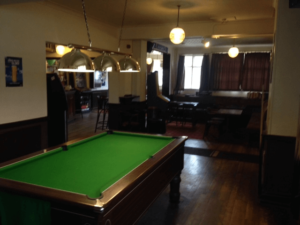
Pub-After-commercial-conversion
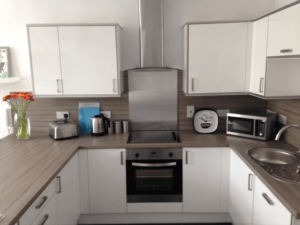
After commercial conversation
Commercial Conversions with Progressive Property
Are you interested in learning more about the latest property investment strategies and commercial conversions? Then why not take a look at our commercial conversion courses?
Have a question or wish to find out more about our commercial conversion courses? Then simply get in touch with us today and a member of the team will be on hand to help.
If you would like to find out more about Commercial Conversions, please join our community here.
Finished reading?
- Take the next step.
If you are ready to take the next steps on your property journey
then our upcoming webinar is the perfect place to start.
About Progressive Property
Progressive Property has created more property millionaires and success stories in the UK than any other property investing education provider. Since 2007, Rob Moore, Mark Homer and their team of experts have built a welcoming, tight knit community to help people achieve freedom, choice and profit by investing in property.

Join Our Next Upcoming Webinar!
Property Investing: Take Control Of Your Financial Future TODAY.
Register now
Related stories

Why Direct Property Investment CRUSHES Property Funds in 2026
The Ultimate 2026 Guide to Property Finance
What Is a "Good" Property Yield in 2026?

Don't miss anything.
Sign up to our newsletter to get access to the newest events, latest promotions and stay up to date.
*We do not give financial advice, we just share our 20 years experience on what has worked for us, & warn you about & openly share what has not. We do not do get rich quick, we do get richer for longer. No schemes, just strategies. we are not an IFA, and we do not give professional advice, we simply educate entrepreneurial people who are smart & make their own decisions. We regularly suggest you do your own due diligence & research before making your investments. And we are here to help. To see our legal disclaimer, click here